
• Latest
Lessons from China on tackling pollution

Lessons from China on tackling pollution

December 22, 2025
‘Woman should be pativrata’: Shaktimaan star Mukesh Khanna, 67, reveals real reason he never married; expert on how love evolves over time | Feelings News

‘Woman should be pativrata’: Shaktimaan star Mukesh Khanna, 67, reveals real reason he never married; expert on how love evolves over time | Feelings News

May 13, 2026
As Knesset dissolution looms, MK Simcha Rothman rushes bill to split Attorney-General position

As Knesset dissolution looms, MK Simcha Rothman rushes bill to split Attorney-General position

May 13, 2026
Japan suspends Australian rugby coach Jones for verbally abusing officials | Rugby News

Japan suspends Australian rugby coach Jones for verbally abusing officials | Rugby News

May 13, 2026
Indian woman in Singapore warns of 00 fine for picking up fallen mangoes

Indian woman in Singapore warns of $5000 fine for picking up fallen mangoes

May 13, 2026
ICC tags Bato dela Rosa as defendant ‘at large’

ICC tags Bato dela Rosa as defendant ‘at large’

May 13, 2026
WUF13 accreditation сard сollection to сommence on 14 May

WUF13 accreditation сard сollection to сommence on 14 May

May 13, 2026
‘Situation isn’t as dire’: Is India’s forex reserves cover enough to defend rupee? Why economists are confident

‘Situation isn’t as dire’: Is India’s forex reserves cover enough to defend rupee? Why economists are confident

May 13, 2026
LE LIBAN ET L’ILLUSION FINANCIÈRE : AUTOPSIE D’UN PONZI SYSTÉMIQUE

LE LIBAN ET L’ILLUSION FINANCIÈRE : AUTOPSIE D’UN PONZI SYSTÉMIQUE

May 13, 2026
Club T20 cricket matches postponed amid rains  – Sri Lanka Mirror – Right to Know. Power to Change

Club T20 cricket matches postponed amid rains  – Sri Lanka Mirror – Right to Know. Power to Change

May 13, 2026
Blister worry hits McIlroy as PGA start looms at Aronimink

Blister worry hits McIlroy as PGA start looms at Aronimink

May 13, 2026
DTAP Expands Access to Sexual Health Services with Two New Clinics in Holland Village and Clarke Quay — Arabian Post

DTAP Expands Access to Sexual Health Services with Two New Clinics in Holland Village and Clarke Quay — Arabian Post

May 13, 2026
LTA: Most Singapore live traffic camera feeds to shut down from June 30 as ERP 2.0 takes over

LTA: Most Singapore live traffic camera feeds to shut down from June 30 as ERP 2.0 takes over

May 13, 2026
Wednesday, May 13, 2026
  • About us
  • Advertise with us
  • Submit Articles
  • Privacy Policy
  • Contact us
Asia Today
No Result
View All Result
Subscribe
  • Login
  • Eastern Asia
    • China
    • Japan
    • Mongolia
    • North Korea
    • South Korea
  • South-eastern Asia
    • Brunei
    • Cambodia
    • Indonesia
    • Laos
    • Malaysia
    • Myanmar
    • Philippines
    • Singapore
    • Thailand
    • Timor Leste
    • Vietnam
  • Southern Asia
    • Afghanistan
    • Bangladesh
    • Bhutan
    • India
    • Iran
    • Maldives
    • Nepal
    • Pakistan
    • Sri Lanka
  • Central Asia
    • Kazakhstan
    • Kyrgyzstan
    • Tajikistan
    • Turkmenistan
    • Uzbekistan
  • Western Asia
    • Armenia
    • Azerbaijan
    • Bahrain
    • Cyprus
    • Georgia
    • Iraq
    • Israel
    • Jordan
    • Kuwait
    • Lebanon
    • Oman
    • Qatar
    • Saudi Arabia
    • State of Palestine
    • Syria
    • Turkey
    • United Arab Emirates
    • Yemen
  • More News
    • Opinion
    • Politics
    • Business
    • Entertainment
    • Fashion
    • Food
    • Health
    • Lifestyle
    • Science
    • Tech
    • Sports
  • Eastern Asia
    • China
    • Japan
    • Mongolia
    • North Korea
    • South Korea
  • South-eastern Asia
    • Brunei
    • Cambodia
    • Indonesia
    • Laos
    • Malaysia
    • Myanmar
    • Philippines
    • Singapore
    • Thailand
    • Timor Leste
    • Vietnam
  • Southern Asia
    • Afghanistan
    • Bangladesh
    • Bhutan
    • India
    • Iran
    • Maldives
    • Nepal
    • Pakistan
    • Sri Lanka
  • Central Asia
    • Kazakhstan
    • Kyrgyzstan
    • Tajikistan
    • Turkmenistan
    • Uzbekistan
  • Western Asia
    • Armenia
    • Azerbaijan
    • Bahrain
    • Cyprus
    • Georgia
    • Iraq
    • Israel
    • Jordan
    • Kuwait
    • Lebanon
    • Oman
    • Qatar
    • Saudi Arabia
    • State of Palestine
    • Syria
    • Turkey
    • United Arab Emirates
    • Yemen
  • More News
    • Opinion
    • Politics
    • Business
    • Entertainment
    • Fashion
    • Food
    • Health
    • Lifestyle
    • Science
    • Tech
    • Sports
No Result
View All Result
Morning News
No Result
View All Result
Home Opinion

Lessons from China on tackling pollution

by Asia Today Team
December 22, 2025
in Opinion
Reading Time: 4 mins read
20 1
A A
0
Lessons from China on tackling pollution
24
SHARES
303
VIEWS
Share on FacebookShare on Twitter

READ ALSO

NFC: what K-P wants

Canada’s China recalibration: Rapprochement or risk-hedging?


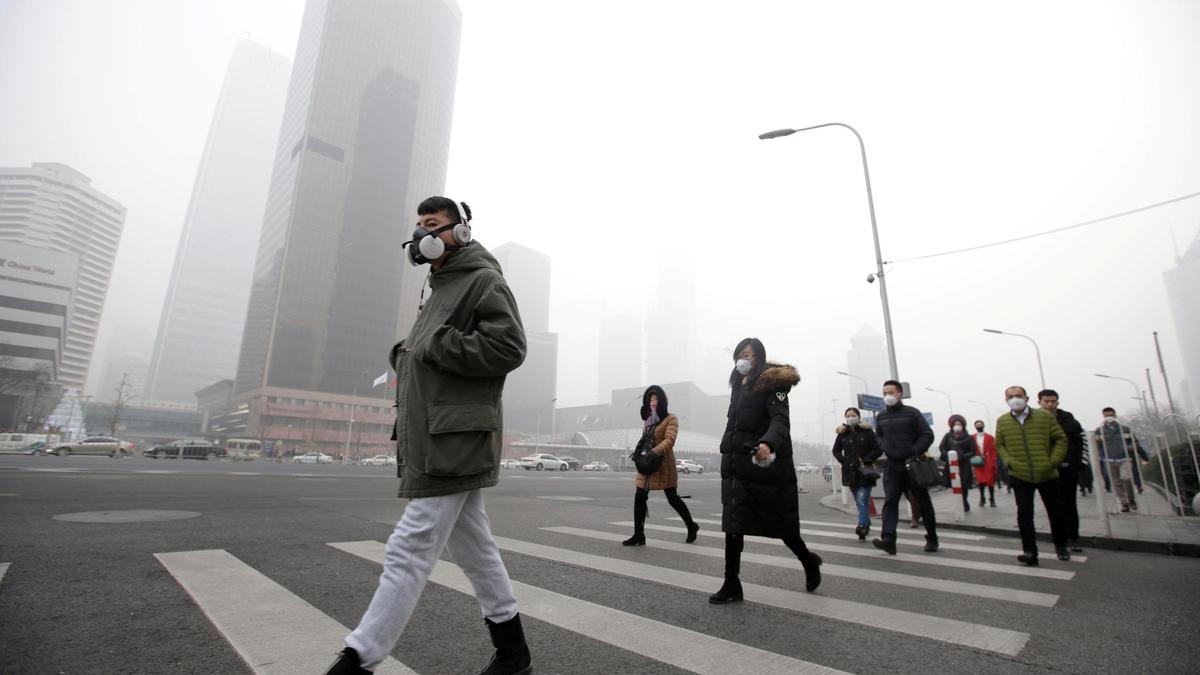
China and India have lengthy grappled with extreme air air pollution. But their trajectories over the previous decade have diverged sharply. As soon as a worldwide image of smog, Beijing managed to chop its annual PM2.5 ranges by greater than 50% between 2013 and 2021, whereas Delhi continues to rank among the many world’s most polluted cities. How is Beijing respiratory simpler?


Additionally learn | All of India breathes dangerous air, AQLI 2025 report says

Clear-air transformation

Beijing’s transformation was neither unintended nor incremental. It stemmed from a multifaceted strategy enabled by two main coverage drives: the Air Air pollution Prevention and Management Motion Plan and the Blue Sky Safety Marketing campaign. These measures focussed on sweeping, top-down interventions throughout vitality, transport, and trade. Beijing’s technique was anchored in three options: coherent coverage, strict enforcement, and regional coordination. The federal government expanded electrical mobility, shut down or relocated a whole bunch of polluting industries, changed hundreds of coal-fired boilers with pure gasoline, imposed stringent China VI vehicular emission requirements, constructed one of many world’s densest PM2.5 real-time air high quality monitoring techniques, and imposed substantial penalties for non-compliance. Most significantly, Beijing didn’t act alone. Its coordination with the neighbouring Tianjin-Hebei provinces by means of a unified ‘airshed’ technique ensured regulation of transboundary air air pollution. The turnaround was outstanding — PM2.5 ranges dropped from the typical 102 μg/m³ in 2013 to 31 μg/m³ in 2024.

India doesn’t lack environmental legal guidelines, however from the scarcity of coherence in implementing them. A powerful statutory framework — the Air (Prevention and Management of Air pollution) Act of 1981, the Setting Safety Act, 1986, and guidelines governing waste, building, and emissions — exists alongside courts, tribunals, and pollution-control boards. Not directly, varied legal guidelines such because the Factories Act, 1948 and the Motor Autos Act, 1988 additionally form air-quality outcomes. But regulatory fragmentation undermines their impression. Over time, India has rolled out many initiatives: the Nationwide Clear Air Programme, the Graded Response Motion Plan, odd-even rationing, building bans, dust-control guidelines, crop-residue measures, work-from-home advisories, and Delhi’s Air Air pollution Mitigation Plan 2025. The Centre has additionally established the Fee for Air High quality Administration (CAQM). These interventions, nevertheless, are largely reactive and activated throughout air pollution peaks relatively than embedded in long-term planning; and businesses operate in silos.

The core distinction between the 2 approaches lies in governance, enforcement, and coordination. China’s Environmental Vertical Reform created a transparent hierarchy for realising native governments’ environmental safety duties. This top-down construction ensured uniform actions, strict enforcement, and speedy implementation. Delhi, nevertheless, operates inside a fragmented governance system involving the Union authorities, the Delhi authorities, air pollution management boards, and a number of municipal our bodies. Because of this, decision-making turns into slower, enforcement weaker, and accountability extra subtle. Beijing’s regulatory businesses additionally possess sweeping authority and substantial assets. Alternatively, India’s air pollution management boards stay chronically understaffed and underfunded. Additionally, Beijing modelled inter-provincial alignment by means of the airshed technique whereas the CAQM’s directives to handle stubble burning from adjoining States stay unauthoritative.

China has made giant sustained investments in clear vitality, electrical mobility, and industrial relocation. Delhi’s personal industrial relocation makes an attempt, such because the Bawana mission, have faltered resulting from insufficient infrastructure and poor service supply. Even ‘sustainable’ alternate options corresponding to waste-to-energy vegetation have failed to fulfill air-quality norms. Delhi’s air pollution load is additional intensified by industrial and vehicular emissions, corrupted Air pollution Beneath Management (PUC) checks, building mud, open waste burning, and meteorological inversions that entice winter pollution. Public transport enlargement has lagged behind the town’s development. Odd-even rationing has proven negligible long-term impression. Behavioural change too, has been slower in India.

What India can borrow

India needn’t emulate China’s political system to realize a turnaround, however it may draw on the ideas that made China’s progress potential. First, governance should shift from episodic responses to a long-term sustained, mission-oriented technique and deal with air air pollution as a nationwide public well being emergency. Second, India should speed up its transition to scrub vitality. Beijing’s transfer away from coal drove main PM2.5 reductions; Delhi equally must increase and undertake energy-efficient requirements appropriate for all sectors. Third, transport reforms have to be enforced, not merely introduced. BS-VI norms require credible PUC techniques, fashionable testing centres, a strong vehicle-scrappage coverage, and congestion administration. Increasing EV charging infrastructure, incentivising electrical mobility, and dramatically strengthening public transport are important. Fourth, industrial coverage should shift from relocation on paper to purposeful industrial zones with full utilities, transport entry, and real-time emissions monitoring. Lastly, air air pollution have to be ruled as a regional drawback. A Beijing-Tianjin-Hebei type airshed mannequin ought to information Delhi-NCR.

Printed – December 22, 2025 01:15 am IST


Source link

Tags: ChinaLessonsPollutionTackling

Related Posts

NFC: what K-P wants
Opinion

NFC: what K-P wants

May 13, 2026
Canada’s China recalibration: Rapprochement or risk-hedging?
Opinion

Canada’s China recalibration: Rapprochement or risk-hedging?

May 12, 2026
In the age of parasocial fame, nepo kids are the new comfort TV
Opinion

In the age of parasocial fame, nepo kids are the new comfort TV

May 10, 2026
The INDIA bloc is imploding
Opinion

The INDIA bloc is imploding

May 9, 2026
India’s antibiotic crisis has a vaccine solution
Opinion

India’s antibiotic crisis has a vaccine solution

May 8, 2026
A new roadmap for independent cinema
Opinion

A new roadmap for independent cinema

May 7, 2026
Asia Today

Copyright © 2022 Asia Today.

Navigate Site

  • Disclaimer
  • Privacy Policy
  • Cookie Privacy Policy
  • DMCA
  • Terms and Conditions
  • Contact us

Follow Us

Welcome Back!

Login to your account below

Forgotten Password?

Retrieve your password

Please enter your username or email address to reset your password.

Log In
No Result
View All Result
  • Homepages
  • World
  • Eastern Asia
    • China
    • Japan
    • Mongolia
    • North Korea
    • South Korea
  • South-eastern Asia
    • Brunei
    • Cambodia
    • Indonesia
    • Laos
    • Malaysia
    • Myanmar
    • Philippines
    • Singapore
    • Thailand
    • Timor Leste
    • Vietnam
  • Southern Asia
    • Afghanistan
    • Sri Lanka
    • Bangladesh
    • Bhutan
    • India
    • Iran
    • Maldives
    • Nepal
    • Pakistan
    • Central Asia
    • Kazakhstan
    • Kyrgyzstan
    • Tajikistan
    • Turkmenistan
    • Uzbekistan
  • Western Asia
    • Armenia
    • Azerbaijan
    • Bahrain
    • Cyprus
    • Georgia
    • Iraq
    • Israel
    • Jordan
    • Kuwait
    • Lebanon
    • Oman
    • Qatar
    • Saudi Arabia
    • State of Palestine
    • Syria
    • Turkey
    • United Arab Emirates
    • Yemen
  • Opinion
  • Politics
  • Business
  • Entertainment
  • Fashion
  • Food
  • Health
  • Lifestyle
  • Science
  • Tech
  • Travel
  • Sports
  • About us
  • Advertise with us
  • Privacy Policy
  • Contact us
  • Support AsiaToday

Copyright © 2022 Asia Today.