

• Latest
The pathway for India to beat cervical cancer

The pathway for India to beat cervical cancer

July 24, 2026
Jerusalem highlights: July 24-30 | The Jerusalem Post

Jerusalem highlights: July 24-30 | The Jerusalem Post

July 24, 2026
LeBron James joins Philadelphia 76ers, calls it his 'last decision'

LeBron James joins Philadelphia 76ers, calls it his 'last decision'

July 24, 2026
Lee arrives in San Francisco, set to meet Jensen Huang, Sam Altman

Lee arrives in San Francisco, set to meet Jensen Huang, Sam Altman

July 24, 2026
Indian HC issues clarification on visa for SL pilgrims visiting India – Sri Lanka Mirror – Right to Know. Power to Change

Indian HC issues clarification on visa for SL pilgrims visiting India – Sri Lanka Mirror – Right to Know. Power to Change

July 24, 2026
ERP Group Launches AI-Powered Cloud Accounting & HR Payroll Software for Indian MSMEs

ERP Group Launches AI-Powered Cloud Accounting & HR Payroll Software for Indian MSMEs

July 24, 2026
Rahul, Akhilesh using student protests to further own agendas: LJP (Ram Vilas) MP

Rahul, Akhilesh using student protests to further own agendas: LJP (Ram Vilas) MP

July 24, 2026
Man killed wife inside Thar she gifted him: Moradabad Police

Man killed wife inside Thar she gifted him: Moradabad Police

July 24, 2026
Maps: Tracking Tropical Storm Noul

Maps: Tracking Tropical Storm Noul

July 24, 2026
Photonics industry thrives in east China’s Suzhou

Photonics industry thrives in east China’s Suzhou

July 24, 2026
Senegal gets CAS date for appeal to regain AFCON from Morocco | Football News

Senegal gets CAS date for appeal to regain AFCON from Morocco | Football News

July 24, 2026
Mengniu’s Chinese Culture Pavilion Captivates the World at the FIFA World Cup — Arabian Post

Mengniu’s Chinese Culture Pavilion Captivates the World at the FIFA World Cup — Arabian Post

July 24, 2026
Car bomb intercepted on Irish Border

Car bomb intercepted on Irish Border

July 24, 2026
Friday, July 24, 2026
  • About us
  • Advertise with us
  • Submit Articles
  • Privacy Policy
  • Contact us
Asia Today
No Result
View All Result
Subscribe
  • Login
  • Eastern Asia
    • China
    • Japan
    • Mongolia
    • North Korea
    • South Korea
  • South-eastern Asia
    • Brunei
    • Cambodia
    • Indonesia
    • Laos
    • Malaysia
    • Myanmar
    • Philippines
    • Singapore
    • Thailand
    • Timor Leste
    • Vietnam
  • Southern Asia
    • Afghanistan
    • Bangladesh
    • Bhutan
    • India
    • Iran
    • Maldives
    • Nepal
    • Pakistan
    • Sri Lanka
  • Central Asia
    • Kazakhstan
    • Kyrgyzstan
    • Tajikistan
    • Turkmenistan
    • Uzbekistan
  • Western Asia
    • Armenia
    • Azerbaijan
    • Bahrain
    • Cyprus
    • Georgia
    • Iraq
    • Israel
    • Jordan
    • Kuwait
    • Lebanon
    • Oman
    • Qatar
    • Saudi Arabia
    • State of Palestine
    • Syria
    • Turkey
    • United Arab Emirates
    • Yemen
  • More News
    • Opinion
    • Politics
    • Business
    • Entertainment
    • Fashion
    • Food
    • Health
    • Lifestyle
    • Science
    • Tech
    • Sports
  • Eastern Asia
    • China
    • Japan
    • Mongolia
    • North Korea
    • South Korea
  • South-eastern Asia
    • Brunei
    • Cambodia
    • Indonesia
    • Laos
    • Malaysia
    • Myanmar
    • Philippines
    • Singapore
    • Thailand
    • Timor Leste
    • Vietnam
  • Southern Asia
    • Afghanistan
    • Bangladesh
    • Bhutan
    • India
    • Iran
    • Maldives
    • Nepal
    • Pakistan
    • Sri Lanka
  • Central Asia
    • Kazakhstan
    • Kyrgyzstan
    • Tajikistan
    • Turkmenistan
    • Uzbekistan
  • Western Asia
    • Armenia
    • Azerbaijan
    • Bahrain
    • Cyprus
    • Georgia
    • Iraq
    • Israel
    • Jordan
    • Kuwait
    • Lebanon
    • Oman
    • Qatar
    • Saudi Arabia
    • State of Palestine
    • Syria
    • Turkey
    • United Arab Emirates
    • Yemen
  • More News
    • Opinion
    • Politics
    • Business
    • Entertainment
    • Fashion
    • Food
    • Health
    • Lifestyle
    • Science
    • Tech
    • Sports
No Result
View All Result
Morning News
No Result
View All Result
Home Opinion

The pathway for India to beat cervical cancer

by Asia Today Team
July 24, 2026
in Opinion
Reading Time: 4 mins read
21 0
A A
0
The pathway for India to beat cervical cancer
24
SHARES
304
VIEWS
Share on FacebookShare on Twitter

READ ALSO

M.K. Stalin writes: ‘NEET’s promise has failed; it’s time to trust States’

More than half of new prime mall openings in Singapore were F&B stores: Report


For the primary time since data started, no lady aged 20–24 died from cervical most cancers in England over a five-year interval. The rationale was a vaccine given to schoolgirls almost twenty years earlier. A current examine in The Lancet, linking HPV vaccination data from 2008–18 with mortality information by way of 2024, discovered no cervical most cancers deaths amongst ladies within the first cohorts provided the vaccine. Screening participation had really declined on this technology, making vaccination the one believable rationalization.
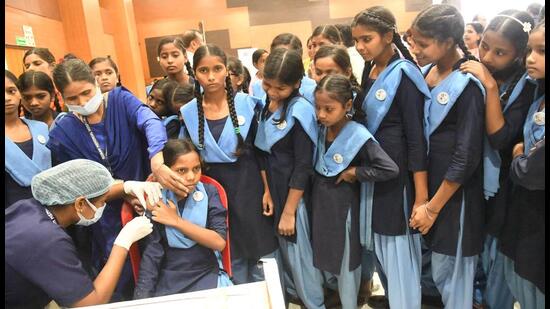
Earlier this year, the Government of India began rolling out HPV vaccination nationally using a single dose of Gardasil-4 vaccine to roughly 1.15 crore girls aged 14 years every year across all states and Union Territories. The vaccine is provided free of cost at designated Government health facilities. (HT Archive)
Earlier this yr, the Authorities of India started rolling out HPV vaccination nationally utilizing a single dose of Gardasil-4 vaccine to roughly 1.15 crore women aged 14 years yearly throughout all states and Union Territories. The vaccine is offered freed from price at designated Authorities well being amenities. (HT Archive)

England just isn’t alone. Final yr, Public Well being Scotland reported that amongst ladies vaccinated at ages 12–13, no case of invasive cervical most cancers had been detected after as much as 16 years of follow-up. Older, unvaccinated ladies in Britain proceed to develop cervical most cancers and die from it. Amongst ladies vaccinated in adolescence, nevertheless, the illness has successfully disappeared.

In the meantime, Australia launched HPV vaccination in 2007, reached protection above 80%, and changed Pap smears with main HPV testing in 2017. Cervical most cancers incidence fell to six.3 circumstances per 100,000 ladies by 2021, and for the primary time since nationwide data started in 1982, no lady underneath 25 was recognized with the illness. Australia is projected to turn into the world’s first nation to get rid of cervical most cancers as a public well being downside, lowering incidence beneath 4 circumstances per 100,000 ladies yearly round 2035.

Cervical most cancers occupies a singular place in drugs. Practically all circumstances start with persistent an infection by the human papillomavirus (HPV), and two strains (HPV-16 and HPV-18) trigger about 70% of them. In contrast to most cancers, the principal trigger is thought, an infection will be prevented, and the illness develops slowly sufficient for screening to detect precancerous lesions earlier than they turn into life-threatening. It’s the solely main most cancers for which the World Well being Group has adopted a proper technique for world elimination.

India might observe however has a protracted technique to go. Practically one in 4 of the world’s roughly 349,000 cervical most cancers deaths in 2022 occurred in India. Cervical most cancers is the nation’s second most typical most cancers amongst ladies and strikes disproportionately through the economically and socially productive years between ages 30 and 60.

Recognizing that elimination is now achievable, the World Well being Group has set three world targets for 2030: vaccinate 90% of ladies towards HPV by age 15, display 70% of ladies with a high-performance check by ages 35 and 45, and be certain that 90% of ladies with cervical illness obtain applicable remedy. Australia is approaching all three. Till just lately, India had scarcely begun the primary and is way from the second objective.

The best weak spot is screening. In accordance with the fifth Nationwide Household Well being Survey (NFHS-5), just one.9% of Indian ladies aged 30–49 had ever been screened for cervical most cancers, towards the WHO goal of 70 p.c. Screening in India depends largely on visible inspection with acetic acid, a reasonable however comparatively insensitive methodology that continues to be underutilised. Even Tamil Nadu, amongst India’s best-performing states, reaches fewer than one in ten eligible ladies. Unsurprisingly, declines in cervical most cancers mortality have lagged far behind these seen in nations with organised screening programmes.

There may be, nevertheless, purpose for optimism. Earlier this yr, the Authorities of India started rolling out HPV vaccination nationally utilizing a single dose of Gardasil-4 vaccine to roughly 1.15 crore women aged 14 years yearly throughout all states and Union Territories. The vaccine is offered freed from price at designated Authorities well being amenities, and by constructing on the Common Immunisation Programme and school-based supply, India can capitalise on one of many world’s largest and handiest vaccine distribution programs. Over time, the expectation is that Cervavac, the primary HPV vaccine developed and manufactured in India by the Serum Institute of India would additionally enter the programme as soon as it has met the required requirements.

But, vaccination alone won’t get rid of cervical most cancers. The ladies vaccinated as we speak won’t attain the ages at biggest danger for an additional two or three a long time, whereas the ladies almost certainly to develop cervical most cancers over the subsequent thirty years are unvaccinated adults. Screening is the one efficient defence for older ladies. Until India expands screening quickly, ideally by way of HPV testing, and strengthens referral and remedy programs, it won’t be able to stop deaths in older ladies.

Public confidence is one other problem. Misconceptions linking HPV vaccination to infertility persist regardless of overwhelming proof on the contrary. Over a decade in the past, an HPV demonstration programme was derailed by controversy over a number of unrelated deaths and delayed nationwide adoption for nearly a decade. A key want is to make sure the belief of fogeys and communities because the programme is rolled out additional.

Science has carried out its job. If India can maintain vaccination and broaden screening over the subsequent twenty years, cervical most cancers may very well be a factor of the previous. Few public well being interventions would save extra lives at such little price.

Ramanan Laxminarayan is president, One Well being Belief. The views expressed are private

(It is a Hindustan Instances digital unique)


Source link

Tags: beatcancercervicalIndiaPathway

Related Posts

M.K. Stalin writes: ‘NEET’s promise has failed; it’s time to trust States’
Opinion

M.K. Stalin writes: ‘NEET’s promise has failed; it’s time to trust States’

July 23, 2026
More than half of new prime mall openings in Singapore were F&B stores: Report
Opinion

More than half of new prime mall openings in Singapore were F&B stores: Report

July 22, 2026
Pak-Italy collaboration
Opinion

Pak-Italy collaboration

July 21, 2026
If the U.S. keeps messing with this spy agency, it’ll pay a high price
Opinion

If the U.S. keeps messing with this spy agency, it’ll pay a high price

July 20, 2026
Never mind Bastille, India storms Paris Haute Couture Week
Opinion

Never mind Bastille, India storms Paris Haute Couture Week

July 19, 2026
Right to walk, but where’s the ease?
Opinion

Right to walk, but where’s the ease?

July 18, 2026
Asia Today

Copyright © 2022 Asia Today.

Navigate Site

  • Disclaimer
  • Privacy Policy
  • Cookie Privacy Policy
  • DMCA
  • Terms and Conditions
  • Contact us

Follow Us

Welcome Back!

Login to your account below

Forgotten Password?

Retrieve your password

Please enter your username or email address to reset your password.

Log In
No Result
View All Result
  • Homepages
  • World
  • Eastern Asia
    • China
    • Japan
    • Mongolia
    • North Korea
    • South Korea
  • South-eastern Asia
    • Brunei
    • Cambodia
    • Indonesia
    • Laos
    • Malaysia
    • Myanmar
    • Philippines
    • Singapore
    • Thailand
    • Timor Leste
    • Vietnam
  • Southern Asia
    • Afghanistan
    • Sri Lanka
    • Bangladesh
    • Bhutan
    • India
    • Iran
    • Maldives
    • Nepal
    • Pakistan
    • Central Asia
    • Kazakhstan
    • Kyrgyzstan
    • Tajikistan
    • Turkmenistan
    • Uzbekistan
  • Western Asia
    • Armenia
    • Azerbaijan
    • Bahrain
    • Cyprus
    • Georgia
    • Iraq
    • Israel
    • Jordan
    • Kuwait
    • Lebanon
    • Oman
    • Qatar
    • Saudi Arabia
    • State of Palestine
    • Syria
    • Turkey
    • United Arab Emirates
    • Yemen
  • Opinion
  • Politics
  • Business
  • Entertainment
  • Fashion
  • Food
  • Health
  • Lifestyle
  • Science
  • Tech
  • Travel
  • Sports
  • About us
  • Advertise with us
  • Privacy Policy
  • Contact us
  • Support AsiaToday

Copyright © 2022 Asia Today.