
Throughout North Korea, the countryside is being reworked. Over the previous few years, Kim Jong Un’s rural housing initiative has seen tens of 1000’s of homes and residence buildings constructed, and the 20×10 regional growth initiative is shortly building-up native industries throughout the nation.
Rural growth progress is seen on business satellite tv for pc imagery and boasted in state media studies, however a go to to the inter-Korean border is a reminder that a lot of the nation continues to be dwelling in—as Kim Jong Un described it—“centuries-old backwardness.”
To make sure, most rural areas of North Korea seen throughout the border seem neat and tidy. However additionally they seem previous and drained. The buildings are in all probability all useful however have seen higher days.There seems little in the way in which of automation or know-how in both every day life or farming. Often, an previous truck or bike is seen, however it’s straightforward to see why Kim Jong Un concluded that the agricultural lifestyle has not superior a lot in lots of a long time.
Kim Jong Un’s rural growth plans are shifting quick, however villages like this are a reminded that a lot work lies forward.
That is the second in a two-part sequence taking a look at scenes throughout the inter-Korean border. The first lined building work alongside the southern border.
No Rural Paradise
The Aegibong Observatory on Ganghwa Island, South Korea, is simply 1.5 kilometers from the North Korean shoreline and affords nice views of a small pocket of Kaesong’s Phanmun District. The largely rural district sits to the east and south of Kaesong metropolis and contains the Kaesong Industrial Zone at its center.
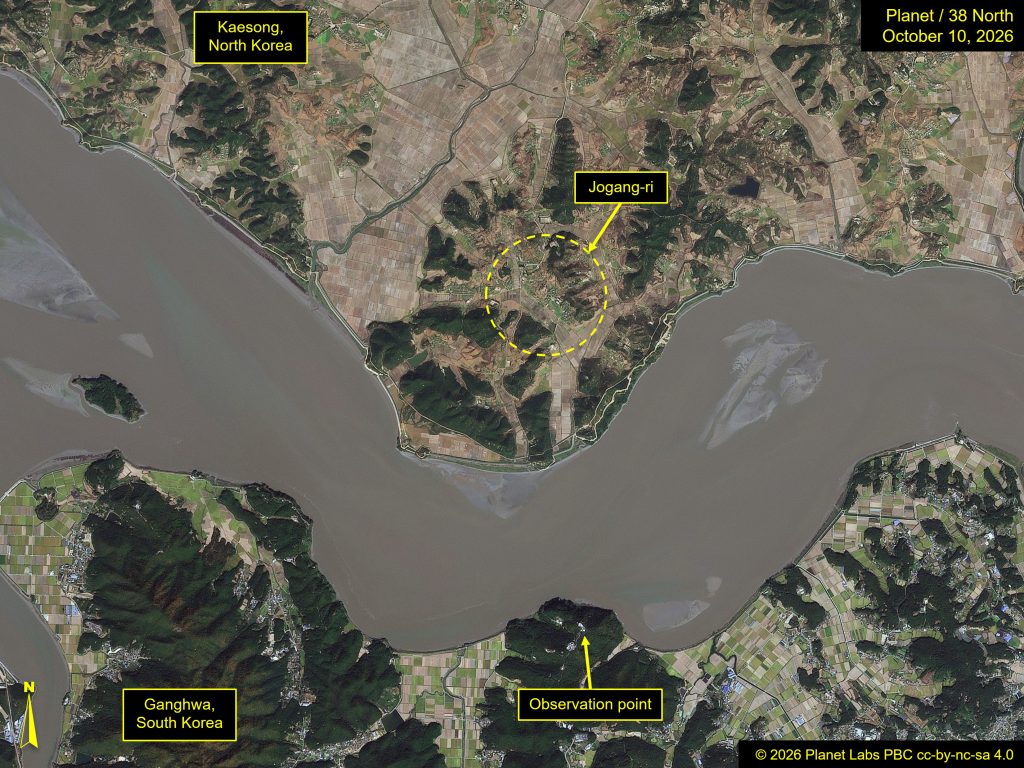
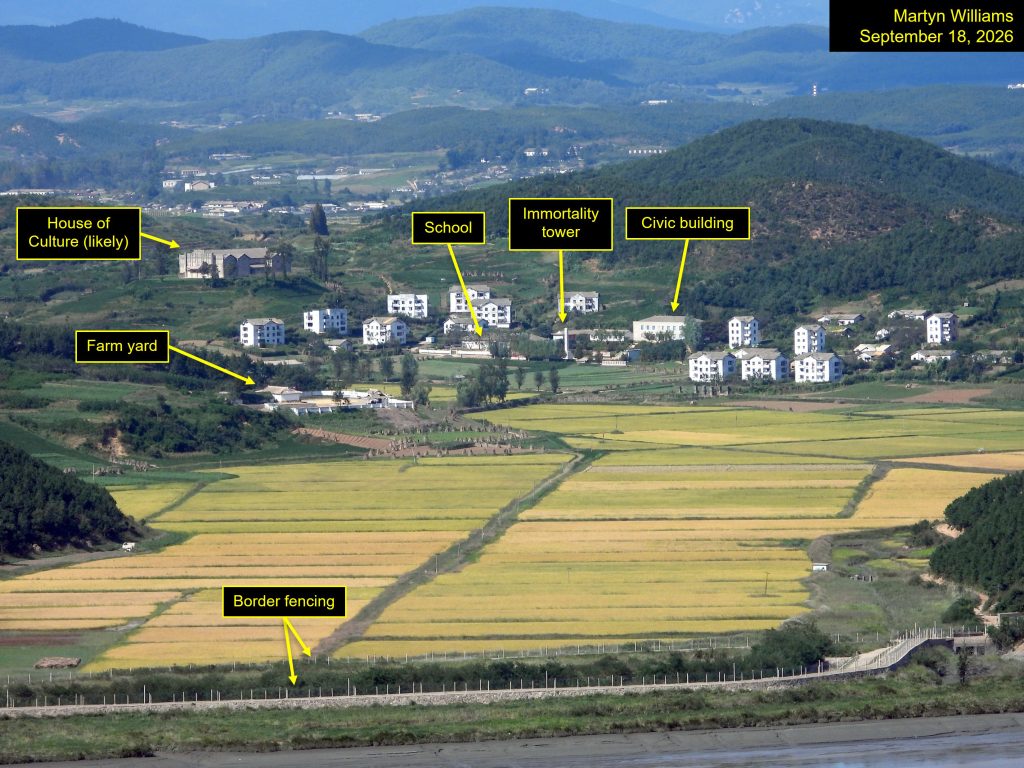
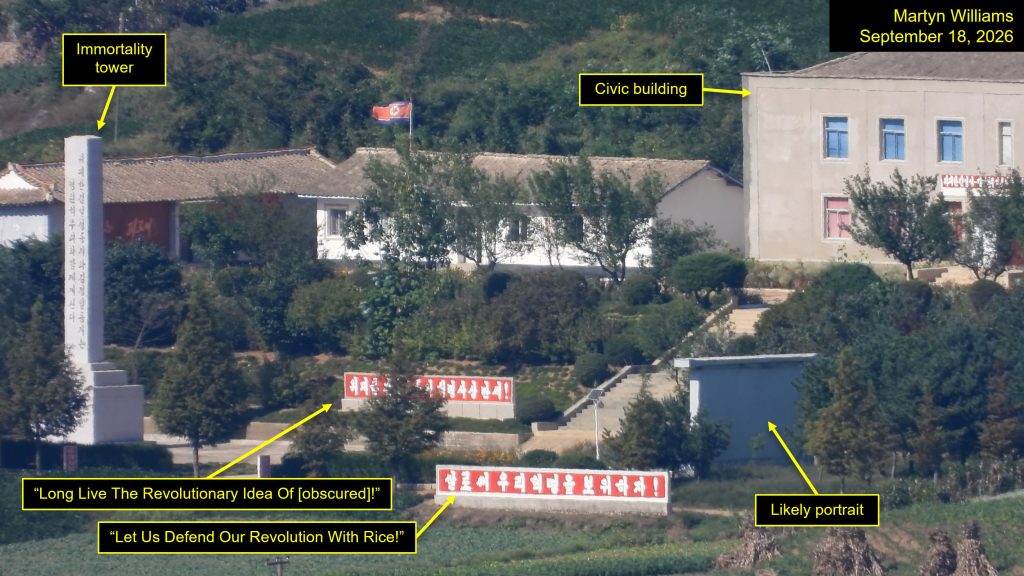
Immediately throughout the river from the observatory is the small agricultural neighborhood of Jogang-ri. The village is centered round a civic constructing with steps main as much as it. Like most North Korean villages, there’s an immortality tower close to the middle. 1000’s of such towers dot the nation as a monument to the founder and first president, Kim Il Sung.
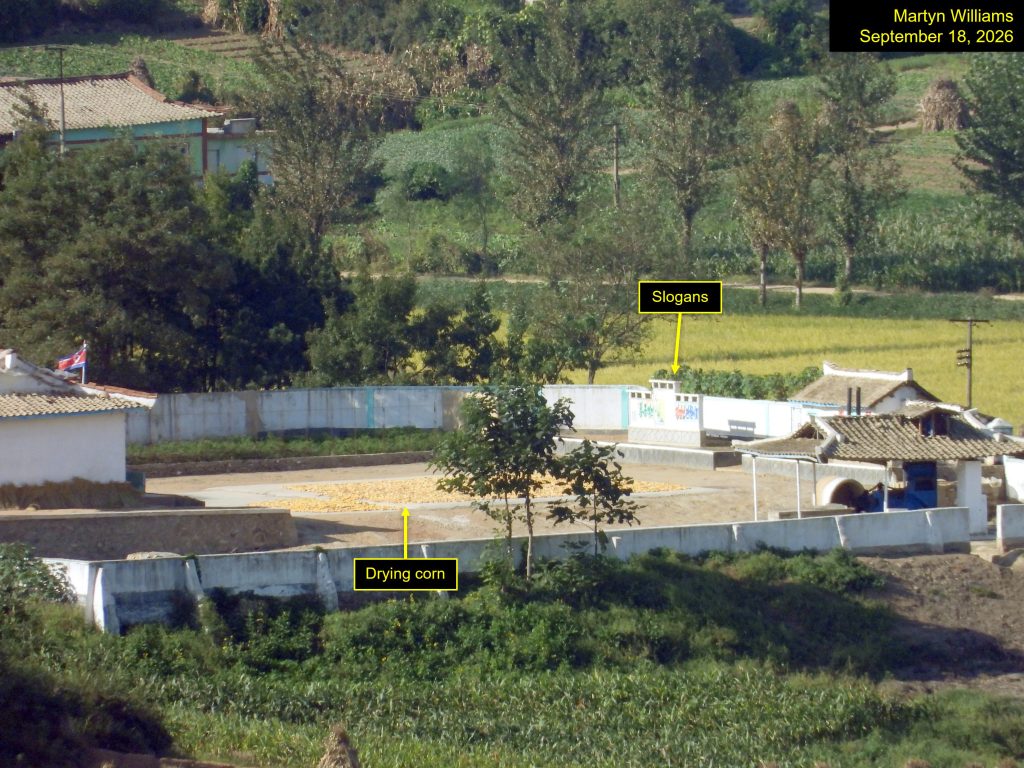
The rear is seen of what’s seemingly a big portrait of a number of North Korean leaders painted on the concrete. Alongside are two giant slogans. One signifies it is a farming neighborhood: “Let Us Defend Our Revolution With Rice!” The opposite is partially obscured by a tree however the seen half reads “Lengthy Reside the Revolutionary Concept of Nice [words obscured]!”
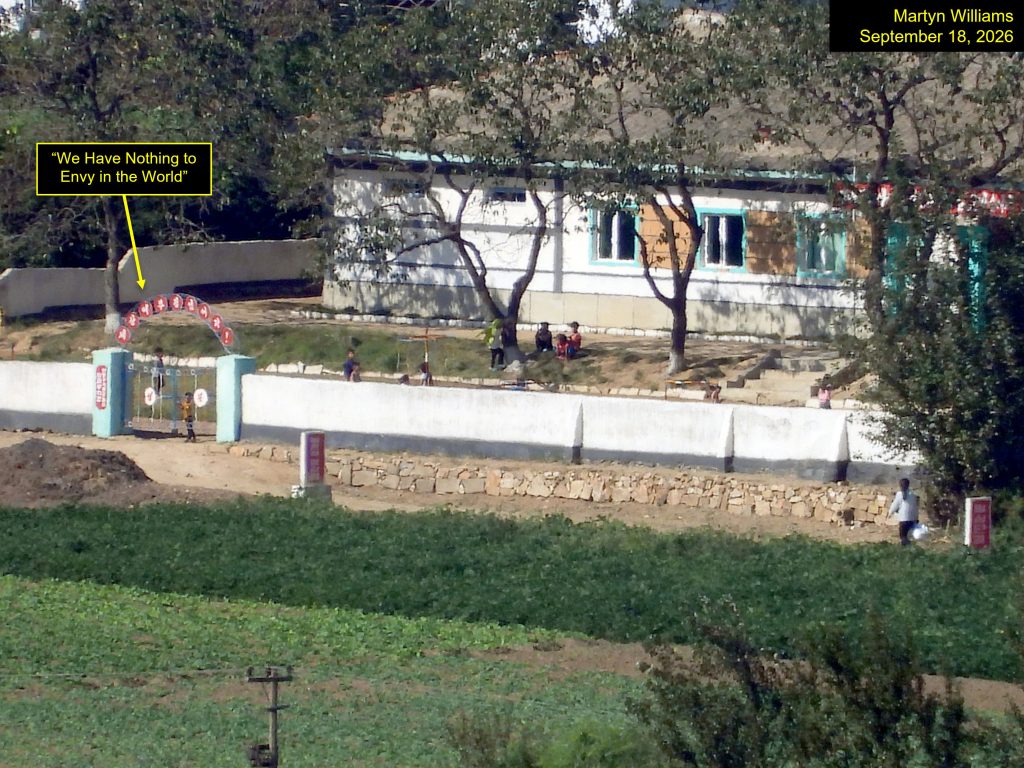
Subsequent door to the civic constructing is a small college. Within the images, taken round 3pm, kids are seen operating across the college yard, seemingly taking part in. Adults often wandered to the college gates to satisfy or converse to them.
Above the doorway to the college yard is an arch with the phrase “We Have Nothing to Envy within the World.”
Per week earlier than I noticed Jogang-ri, state media praised the village farm’s “workteam No. 5” for “elevating the extent of ideological consciousness of agricultural employees in order to coach them into masters of the agricultural revolution within the new period whereas pushing forward with the work to raised the agricultural dwelling setting.”
The slogans mirror the fixed ideological reinforcement prevalent in North Korean life.
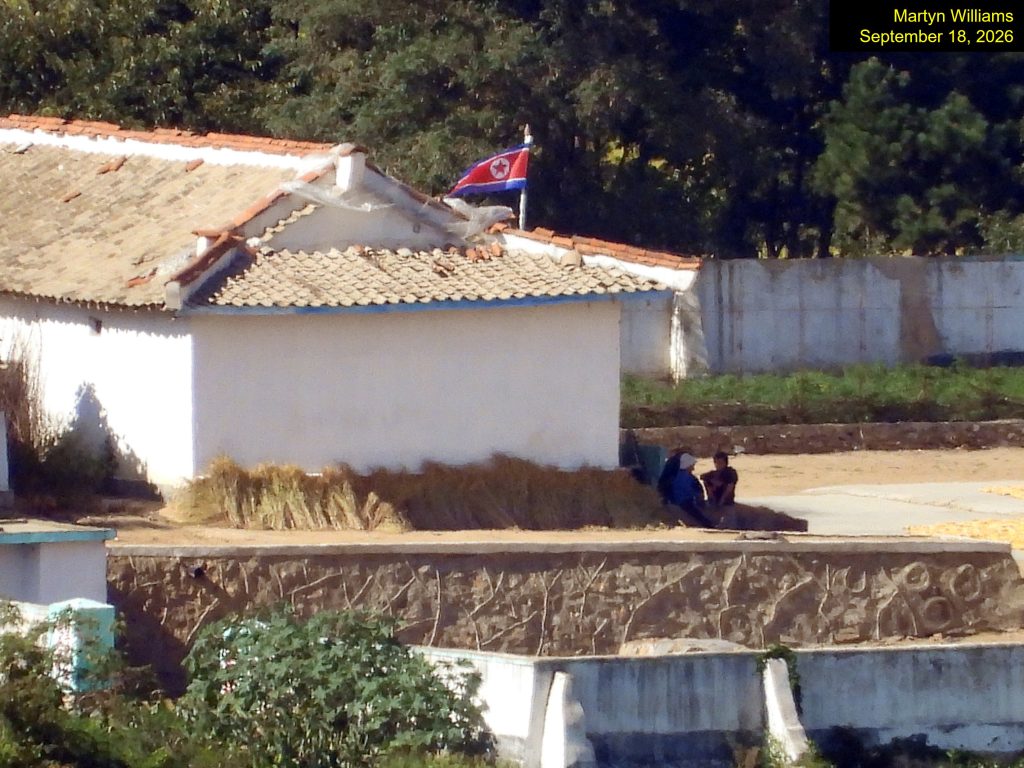
On the day I visited, what gave the impression to be corn was laid out and drying within the farmyard as two folks sat within the shade chatting with one another.
Late September is a vital second within the annual harvest. Every fall, corn is seen in images and satellite tv for pc imagery from across the nation, drying within the late summer season solar in farms, city squares, rooftops, courtroom yards, and even typically on metropolis streets.
On the finish of the farmyard are two boards. One has a bar graph, seemingly of manufacturing quotas, and there are two giant slogans: “All-Out Offensive” and “Towards the Implementation of the Social gathering’s Choices.”
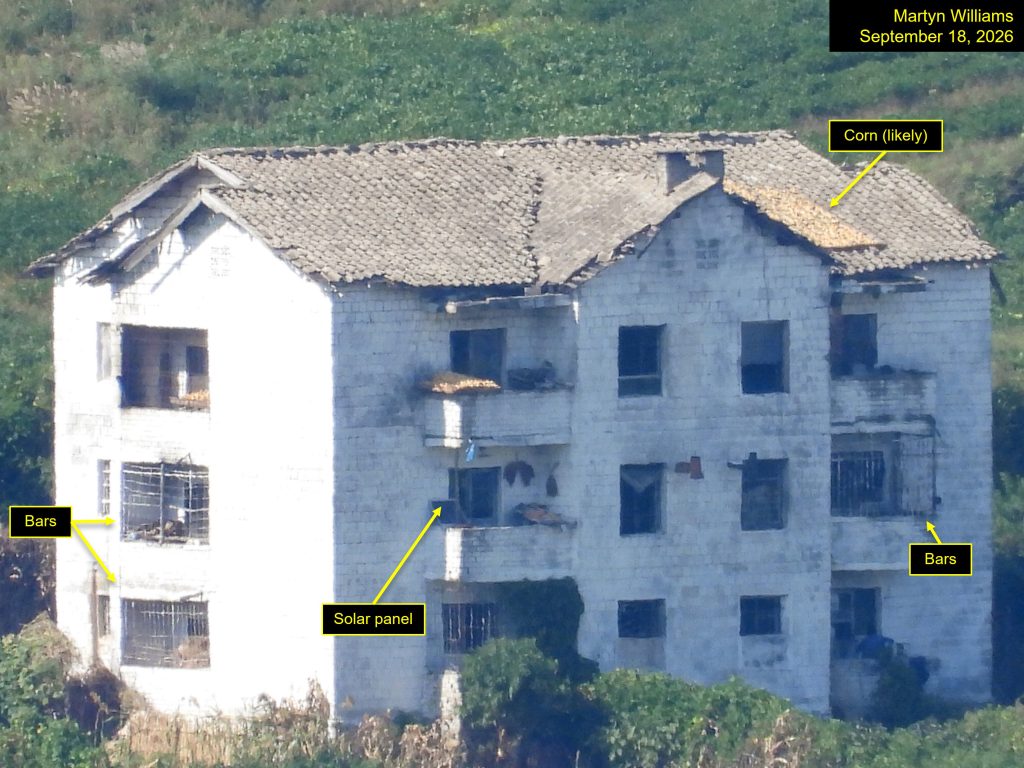
This all happened within the shadow of a number of three-story residence buildings. The buildings all regarded inhabited however in a state of disrepair. It’s clear that the agricultural housing initiative has not reached this village but.
Many of the residences had small sq. photo voltaic panels sitting on balconies or roofs. These are seen throughout North Korea and assist residents address the poor electrical energy provide. Electrical energy strains are seen within the city, however it’s inconceivable to inform what number of hours a day, or week they provide energy to residents.
The photo voltaic panels cost batteries inside the home that can be utilized within the night as soon as the solar units and households are gathered at dwelling.
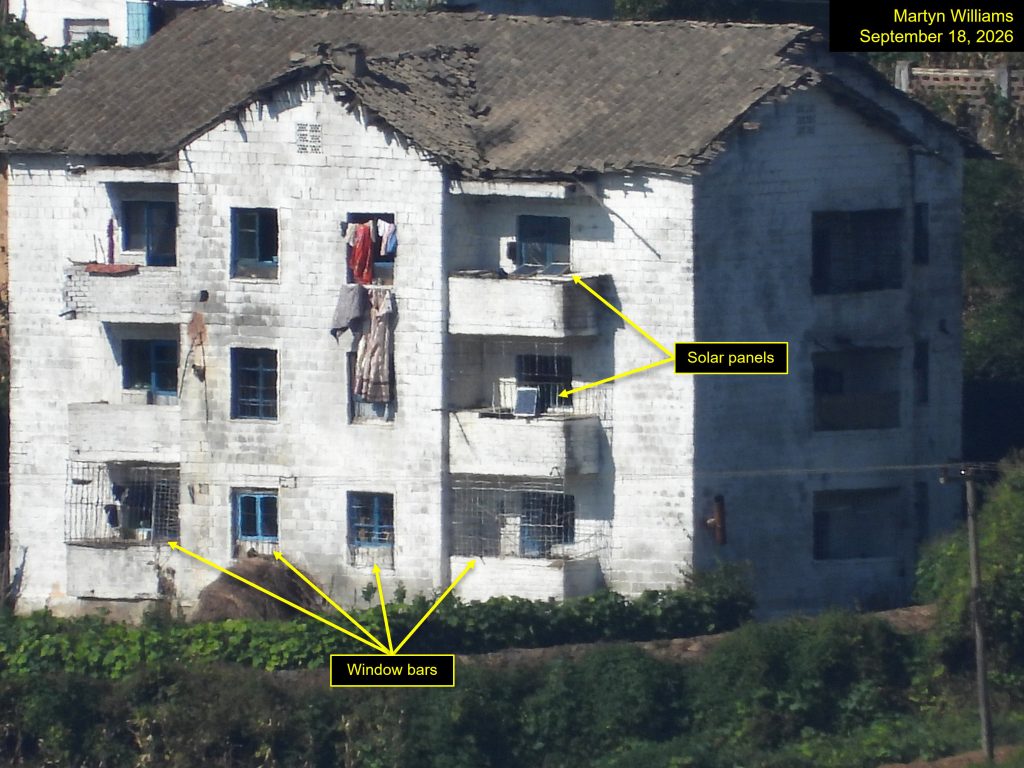
Many of the buildings had bars throughout the home windows on the decrease two flooring, seemingly as a result of they lacked home windows though crime can’t be dominated out. Most of the rooftops had been in dire want of consideration. It appeared that extra corn was drying on these roofs as properly.
Conclusion
If the residents of Jogang-ri are ready for the agricultural revolution to hit their village, they is likely to be inspired by Phanmun District’s inclusion amongst this yr’s areas for the 20×10 regional growth plan.
Within the coronary heart of the district, close to the gates to the Kaesong Industrial Advanced, a number of factories, a hospital and a leisure middle are all beneath building, Completion is due across the finish of this yr. However the services are about 17 kilometers from Jogang-ri, so they don’t seem to be simply accessible.
The closest rural housing growth within the district seems to be Tongnae-ri, about 15 kilometers away. Native residents moved into the brand new homes at Tongnae Farm in late 2024.
Nonetheless, whereas these two examples present that progress has come to their district, the work has not modified the every day lives of residents in Jogang-ri or the scores of villages prefer it all through the realm. For them as it’s for many of the countryside, life stays onerous and it may take years for that to vary.
